Really looking forward to the new book by Brian Haig–if you like a good thriller then I would highly recommend you try his books. They are fast-paced and fun to read. I would read the series from the beginning.
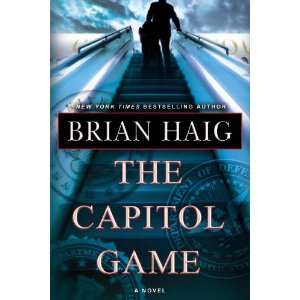
Really looking forward to the new book by Brian Haig–if you like a good thriller then I would highly recommend you try his books. They are fast-paced and fun to read. I would read the series from the beginning.
An emergency fund is for those unexpected events in life that you can’t plan for: the loss of a job, an unexpected pregnancy, a faulty car transmission, and the list goes on and on. It’s not a matter of if these events will happen; it’s simply a matter of when they will happen. Learn more
List your debts, excluding the house, in order. The smallest balance should be your number one priority. Don’t worry about interest rates unless two debts have similar payoffs. If that’s the case, then list the higher interest rate debt first. Learn more
Once you complete the first two baby steps, you will have built serious momentum. But don’t start throwing all your “extra” money into investments quite yet. It’s time to build your full emergency fund. Learn more
When you reach this step, you’ll have no payments—except the house—and a fully funded emergency fund. Now it’s time to get serious about building wealth. Learn more
By this point, you should have already started Baby Step 4—investing 15% of your income—before saving for college. Whether you are saving for you or your child to go to college, you need to start now. Learn more
Now it’s time to begin chunking all of your extra money toward the mortgage. You are getting closer to realizing the dream of a life with no house payments. Learn more
It’s time to build wealth and give like never before. Leave an inheritance for future generations, and bless others now with your excess. It’s really the only way to live! Learn more

Four Square is a really cool new app for Blackberry or Iphone that I have been playing with. Check them out at http://foursquare.com/. The application maps out places in a city and users can then provide each other with tips i.e., try the caramel machiato at XYZ coffee shop. So it allows people to see where you are and at the same time provides inter-activity of the user experience at the location. It if a fun app!!
What is foursquare?
foursquare is a cross between a friend-finder, a social city-guide and a game that rewards you for doing interesting things. We aim to build things to not only help you keep up with the places your friends go, but that encourage you to discover new places and challenge you to explore your neighborhood in new ways.
How do I get it on my phone?
We have apps available for the iPhone, Blackberry, Android and Palm Pre. If you don’t have one of these phones, you can always use our mobile website or if you prefer to checkin via SMS you can send a text to 50500 (like this: @ Ace Bar ! Playing skeeball). For now SMS checkins are only available in the US.
Where is foursquare available?
You can use foursquare anywhere in the world! Check-in at the Statue of Liberty in NYC, the Golden Gate bridge in SF, the Petronas Towers in Kuala Lumpu or the Arch de Triumph in Paris! Back in the day, we were limited to select cities, but now you can check-in anywhere you please!
What is a check-in?
When you tell foursquare where you are, that’s called “checking-in”. You can check-in from parks, bars, museums, restaurants… really anywhere. When you check-in we’ll let your friends know where they can find you and award you points and badges based on your adventurousness. Please only check in once to where you are at the time. Foursquare is meant to be a social utility that helps you connect with friends and experience your city in a new way, with a bit of fun thrown in. Please play fair!
How does foursquare know where I am?
The foursquare apps for iPhone, Blackberry, Android and Palm use GPS to show a list of nearby places. To check-in, just choose the name of the place you’re at from this list of nearby places. If we don’t have the place you’re looking for you can always add it to our listings. Don’t worry, foursquare doesn’t know where you are unless you check-in to tell us your location.
What is “The Mayor” all about?
If you’ve been to a place more than anyone else we’ll crown you the “The Mayor” of that place. We see lots of bars and cafes now offering “Mayor Specials” – a free coffee or appetizer or maybe a special discount to the mayors of their venues. Watch out though – if someone else comes along who has checked in more days than you, they will steal the “Mayor” title back from you.
What are badges?
Badges are little rewards you earn for doing checking-into interesting places. For example, staying out late on a school night or frequenting too many karaoke bars. We’re constantly adding new badges and would love to hear your suggestions.
A lot of our badges are tied to venue “tags”. People use tags to describe the places on foursquare (e.g. jukebox, pool table, fireplace, pizza, etc) Without giving away too much, here’s a few suggested tags you can add to your favorite places to help unlock badges : airport, college, douchebag, food truck, frat, gallery, gym, karaoke, movie theater, photobooth, pizza, playground, socialite, sorority, tourist, etc.
How do I earn points?
Most foursquare checkins will earn you points. You can earn points for your first checkin at a certain place or by adding a new place to our listings. We display a list of the users who have racked up the most points on the “leaderboard”. The idea is that the more you experience, the more places you visit, etc. the higher your score for that week. The leaderboard resets every Sunday at midnight.
Here’s how points are currently awarded: (and yes, we’ve been known to tweak this from time to time)
I am constantly bombarded by offers to refinance my mortgage. Recently I was contacted by my mortgage company to refinance my current mortgage which is a 15 year fixed @ 4.75% interest to a 15 year at 4.25% interest. Ones initial reaction might be to go for it. However, upon further reflection and after consulting my credit union I decided it is not a good idea for me to refinance. Personally I think if you have a mortgage under 5% it is pretty good. Can you get a lower rate–possibly? Is it worth refinancing? This will depend on the length of the mortgage. If you have a 30 year mortgage is is most likely a good idea. Please see the email exchanges below explaining why refinancing was not a good idea in my case.
My Email to the Credit Union
I currently have a 15 year fixed mortgage at 4.75%. I have about 11 years left on the mortgage. I have a 26 payment plan and paying an additional $1,000 a month. Is it a good idea to try to refinance to a 4.25 to 4.35 % rate keeping a 15 year mortgage?
The Credit Union Response
Based on the current terms on your mortgage, I would not recommend a refinance, even if you could meet the qualifications to do so.
Your current rate is only 0.5% higher than our currently offered rate. However, you would most likely pay at least 2-3% of the loan amount as closing costs. This might be worthwhile if you had 30 years to amortize those closing costs. However, you will be paying off any mortgage in 10-15 years, so you would not recover the up-front costs.
To summarize, I don’t see any advantage in refinancing. You have a good loan, and your current practice of prepaying $1000 per months is very beneficial in terms of interest savings. Again, even assuming that you could qualify for a refinance, my recommendation would be to stay with the program you have.
I hope this is helpful, and I would be happy to answer any further questions.
6 Great Dividend Stocks to Consider
Johnson & Johnson engages in the research and development, manufacture, and sale of various products in the health care field worldwide. The company operates through three segments: Consumer, Pharmaceutical, Medical Devices and Diagnostics. Johnson & Johnson has consistently increased dividends for 46 years in a row. The stock yields 3.40%. The yield on cost on stock purchased at the end of 1989 is 29.10%. (analysis)
The Procter & Gamble Company (PG) engages in the manufacture and sale of consumer goods worldwide. The company operates in three global business units (GBUs): Beauty, Health and Well-Being, and Household Care. The company has rewarded stockholders with dividend increases for 53 consecutive years. Check my analysis of the stock.
Wal-Mart Stores, Inc. (WMT) operates retail stores in various formats worldwide. The world’s largest retailer has a 35 year record of annual dividend raises. I would be a buyer of WMT on dips. Check my analysis of the stock.
McDonald’s Corporation (MCD), together with its subsidiaries, franchises and operates McDonald’s restaurants in the food service industry worldwide. The company’s share of the US fast food market is several times larger than its closest competitors, Burger King (BKC) and Wendy’s (WEN). McDonald’s is a major component of the S&P 500 and Dow Industrials indexes. The company is also a dividend aristocrat, which has been consistently increasing its dividends for 33 consecutive years. (analysis)
Consolidated Edison provides electric, gas, and steam utility services in the United States. This dividend aristocrat has raised annual distributions for 36 years in a row. The stock spots a yield of 5.3%, which a good compensation if you seek current income for the next 5 – 10 years. Check my analysis of Consolidated Edison.
Kinder Morgan (KMP) owns and manages energy transportation and storage assets in North America. This dividend achiever has raised annual distributions for the past 14 years. The stock currently yields 6.50%. Check my analysis of Kinder Morgan.
Traveling with your Pet can be fun once you reach your destination but getting our dog from A to B can be very nerve racking. The whole process of getting health certificates, the proper cage, padding for the crate, an ice dish and food for travel is critical. We usually only take our dog with us if we are traveling for more than 2 weeks.
Here are the steps to follow if you are going in our out of the USA:
1) Health Certificate: you will not be able to get your pet on the plane without a health certificate. Not every Veterinarian can issue the certificate in the US. They need to have a special designation that allows them to issue an international health certificate. Our dog also has a micro-chip implanted. It is required in many countries in Europe and super helpful if she ever gets lost.
2) Cage: We have an 82 lb Labrador so we purchased an X-Large Crate. All good Pet Centers have crates. The crate should be well ventilated and have enough room to turn around and stand-up. We have had crates with wheels and without. The only problem with wheels on the crate is that there is a potential for the wheel to break off which is what happened to us.
3) Crate Accessories: The Crate should have a water dish (required by the airlines) and food dish for some Kibble. The water dish should be filled with Ice. We just fill it up and stick it in the freezer the night before. We also place a thick soft mat on the bottom of the crate and some towels so that it is more comfortable. We also tape a letter of instruction for the airline which includes our dog’s name, habits, weight, our names, flight information, phone numbers and address for each location.
LUFTHANSA-We only travel with our dog on Lufthansa. They are fantastic. We have made 7 international trips with our dog and have never had any problems. Usually the flight crew will let us know that our pet is on-board and ok. In Frankfurt they have a brand new Pet Facility where they take the pet out of the cage to feed and provide water for the dog. They also let the dog out to relieve herself. We have never had a problem of any kind and I highly recommend them.
4) At the Airport: Once you arrive at the airport we usually walk her and after 7 international trips she knows this is the time to go Number 1 and 2. Most airports have a “Pet Relief” area for this purpose. Usually the airport check-in person will ask you have the paper work but will not check it. Once your tickets are issued they will ask you to pay a fee for transporting the dog. It ranges from $300 to $500. Most airports like you to wait as long as possible before putting the dog into the crate. Once you are ready to check-in someone from the airline will take you to a Security Check Point where they inspect the inside of the cage. Once they are satisfied everything is ok you can put your dog into the crate. At this point the best thing to do is walk away from the dog and allow the airline personnel to take the dog to the plane. This is the hardest part but your dog has to know you are not nervous or he/she will become nervous.
5) In Transit in Frankfurt-we usually ask about our dogs status in the Lounges or at the Information Desk.
6) Upon Arrival-Once you get out of passport control go to the part of the baggage area where they bring the dogs out. I think it is important that you get there before your dog gets out to calm her down. Also according to Customs you cannot claim that your pet is a member of your family like I have done. Customs will ask you if there is any animal food in the crate–TSA does not allow you to enter with any food in the crate.
I usually ask a family member (if they pick us up) or we purchase water. I think our dog being on the skittish side does not drink or eat anything on route. Last time our dog drank 3 small water bottles of water on arrival. Our dog is usually very anxious to get out of the cage and relieve herself.
The experience of traveling with a Pet can be nerve racking but being without our dog is really hard for us. She is part of the family!!
Hope these tips help!!!
I have found this fun ticker to track my savings and investments. Once I reach my goal I can retire comfortably.


Lulu Lemon makes an excellent backpack. I used it for the first time yesterday traveling from Washington DC to Frankfurt. The bag is a good size and has tons of pockets. The beauty of the bag is that each pocket is well thought out and color coded for phones, ipods, cables, wallets, keys etc. Each pocket has a magnet that closes the pocket easily and without a fuss. The bag also has a padded strap making it very comfortable to use. It also includes a separate pocket for a laptop that is well padded. Overall the bag gets 5 Stars. 
Money Magazine recently released the only 7 investments you’ll ever need and, surprise surprise, my favorite firm, Vanguard, was listed first choice for five of the seven. Their founder, John Bogle, was a major proponent of index funds and it shows in their offering, as almost all of Money’s choices were low-expense ratio index funds.
Need another reason to have a mutual fund account at Vanguard? (No, Vanguard doesn’t sponsor this site!)
Blue-chip US-stock fund: Fidelity Spartan 500 Index (FSMKX) because it replicates the S&P 500 with an expense ratio of 0.10% (coincidentally, Vanguard’s version, the Vanguard 500 Index Fund Investor Shares (VFINX) is 50% more expensive with a ratio of 0.15%).
Blue-chip foreign-stock fund: Vanguard Total International Stock Index (VGTSX) because of its solid performance, beating 90% of its peers, and because it’s an index fund with an expense ratio of 0.27%. Another Vanguard fund, the Vanguard FTSE All World Ex-U.S. ETF (VEU), was listed as an alternative.
Small-company fund: T. Rowe Price New Horizons (PRNHX) is an actively managed fund, one of the few actively managed funds they selected, and is “one of the most efficient of the actively managed crowd.” Considering it is actively managed, an expense ratio of 0.8% is pretty good, about half the average.
Value fund: Oh look, another Vanguard fund – the Vanguard Value Index (VIVAX) and its 0.2% expense ratio and a record that trumps 78% of its peers. Value funds go after investments that appear overlooked or beaten down and try earn a little off those cigar butts and dividends, rather than looking for growth potential.
High-quality bond fund: Vanguard Total Bond Market Index (VBMFX) snags this category with a 0.2% expense ratio. Bonds are good to be the rock in your portfolio to give you some grounding as your other investments shoot up and crash down. 🙂
Inflation-protected bond fund: This last category was won by Vanguard’s Inflation-Protected Securities Fund (VIPSX) and it’s 0.2% expense ratio (Vanguard’s index funds are ridiculously efficient). “Among TIPS funds, Vanguard Inflation-Protected Securities has several things going for it, including lower costs and better management than you would get if you assembled your own TIPS portfolio. While the fund returned 6.6% over the past five years, you shouldn’t expect it to make a pile of dough. Its job is to protect the money you already have.”
Improving Your Finances What the Bogleheads Know for Sure
By Christine Benz | 03-03-10 | 06:00 AM | E-mail Article
If you’ve frequented the “Discuss” area of Morningstar.com, chances are you know the name Taylor Larimore. Taylor, a former IRS officer and retired chief of the Small Business Association’s finance division in South Florida, has contributed more than 24,000 posts to the Morningstar.com discussion boards for more than a decade, and also posts on a related site, http://www.bogleheads.org. He is also co-author of two Bogleheads’ books: The Bogleheads’ Guide to Investing (Wiley, 2007) and The Bogleheads’ Guide to Retirement Planning (Wiley, 2009).
I recently caught up with Taylor to discuss his investment philosophy and his view that the simplest investment plans are usually the most effective.
1. What was the genesis of the Vanguard Diehards forum on
Morningstar.com?
I have long been a student of mutual fund investing, and Morningstar is by far the best source of reliable mutual fund information. It is where I go to learn. When Morningstar started its first public forum in 1997, I began asking questions on the John Rekenthaler Forum. John is now Morningstar’s vice president of research and was a wonderful source of information and sound advice. For some reason, a large percentage of the questions (and answers) on the site were from Vanguard investors. Several of us asked the forum administrator at that time, Jenny Barrie, to start a Vanguard Forum. We argued so long and loudly that Morningstar gave us its first company forum and that’s why Morningstar called it “Vanguard Diehards.” I posted in the first conversation in March 1998.
2. You’re a big fan of simplicity when it comes to investing, and that comes through loud and clear in the two Bogleheads’ books. What are some key pieces of advice for those wishing to simplify their investment lives?
I have been investing more than 50 years. Most of those years I spent constructing complex portfolios and often using market-timing strategies–all in an attempt to beat the market. Well, guess what? Despite all the time and effort I was spending trying to beat the market–the market was beating me–especially after taxes. I’ve now come to realize that the best portfolios for ordinary investors are low-cost and simple to understand and maintain. Most unbiased investing experts agree. Index funds are a great starting point for those looking to simplify their investment lives. Jack Bogle introduced the first index fund for retail investors in 1976–the Vanguard S&P 500 Index Fund (VFINX). That fund represents about 75% of the U.S. stock market in market value. Fidelity called his fund, “Bogle’s Folly,” but it is interesting to learn what’s happened. In the 40-year period ending December 2008, $10,000 invested in Vanguard’s S&P Index Fund would have grown to $346,117. During the same period the average managed domestic equity fund increased to$201,513–a huge difference.
The Arithmetic of Active Management by Nobel Laureate William Sharpe explains why an average actively managed fund must have a lower return than the average index fund. Other significant advantages of index funds are less volatility, neverbelow-average returns, no manager changes, no overlap, no style drift, tax efficiency, and peace of mind leaving more time for family and other endeavors.
Total market index funds make it even easier to build and oversee a simple and effective portfolio. Vanguard Total Bond Market Index Fund (VBMFX) was launched in 1986, followed by Total Stock Market Index Fund (VTSMX) in 1992 and Total International Stock Index Fund (VGTSX) in 1996. Using just these three funds, representing more than 10,000 individual securities, today’s investor can achieve market returns (less costs) with diversification that was unheard of when I started investing. A second key to investment simplicity is to stay the course. Once we have decided on our asset allocation, it is important to do nothing (except rebalance). This is much harder than it sounds because Wall Street’s marketing machine, aided by the media, is constantly urging us to take action. Bogleheads call this “investment pornography.” Mr. Bogle wrote in Common Sense on Mutual Funds: “‘Stay the course.’ It is the most important single piece of investment wisdom I can give to you.” Other investing experts agree.
3. Your latest book, The Bogleheads’ Guide to Retirement Planning, was a collaborative effort with several other longtime Bogleheads. What are some of the key pieces of advice you would give to retirees attempting to navigate the current environment of very low yields?
Safe investment options are currently limited to low returns. Higher return nearly always means higher risk. In our retirement account, my wife, Pat, and I currently hold 50% in Vanguard Total Bond Market Index Fund and 50% in Vanguard Inflation-Protected Securities Fund (VIPSX). The worst annual return for either fund was negative 2.6% in 2004. We can live with that. Another option, especially for older retirees, is a single-premium immediate annuity. It is the only type of annuity I like, but a SPIA will provide the largest guaranteed lifetime income of any investment. We purchased two SPIAs when we were in our late 70s. It was comforting to have their steady income during the recent bear market and to know that we won’t run out of money before running out of life. I think the key piece of advice for most retirees is to do what is necessary to keep what they’ve accumulated. This usually means a large allocation to relatively safe investments such as money market funds, CDs, and good-quality bonds. I like Mr. Bogle’s rule that our allocation to bonds should about equal our age. Stocks are very unpredictable. The Dow plunged 89% during my lifetime. Retirees must resistthe urge to seek higher returns if it means taking unnecessary risk.
4. You once ran a contest on Morningstar.com to illustrate the futility of
timing the market. What would you say to individual investors and advisors timing the market. What would you say to individual investors and advisors who employ more tactical approaches?
I would repeat what I learned in your Morningstar Course 106: “We’re not keen on market-timing. It just doesn’t work.” Every reliable study I’ve seen arrives at this same conclusion. Mr. Bogle wrote in his great book, Common Sense on Mutual Funds: “After nearly fifty years in this business, I do not know of anybody who has done market timing successfully and consistently. I don’t even know anybody who knows anybody who as done it successfully and consistently.” It seems to be human nature to think we can forecast the stock market. To demonstrate how difficult it is, at the beginning of 2001, I started a Boglehead Contest on the Morningstar Diehard forum. I asked each Boglehead to guess what the U.S. stock market return would be at year-end. The average Boglehead forecast a 6% gain. Instead, the market lost 11%. Last year we had 282 Bogleheads register. Their year-end forecasts for the S&P 500 Index, made in January 2009, ranged all the way from a decline of 40% to a gain of 27%. No one really knows what the securities markets will do tomorrow, next year, or the next 10 years. Ten years ago virtually no one was forecasting that bonds would outperform stocks 10 years later.
I think the best strategy is to spend time creating a sensible, long-term asset allocation plan, then stick with it. My friend Bill Bernstein wrote: “If over the past 10 or 20 years, you had simply held a portfolio consisting of one quarter each of indexes of large U.S. stocks, small U.S. stocks, foreign stocks, and high-quality U.S. bonds, you would have beaten over 90% of all professional money managers and with considerably less risk.”
5. If you could sum up what you have learned during a lifetime of investing experience, what would you say?
My advice to be a successful investor is this: Save regularly, develop a personal asset-allocation plan, use a few broad market index funds, keep costs low (including taxes), avoid mistakes, strive for simplicity, and stay the course.
BARRON’S COVER
Even Better Than Bonds
By ANDREW BARY | MORE ARTICLES BY AUTHOR
With bonds fully priced, it may be time to swap into preferred shares, utility stocks and other investments that produce income but offer protection if interest rates rise.
TIRED OF THE PUNY YIELDS ON YOUR BONDS? Worried that interest rates and inflation will rise, clobbering their prices? Now may be the time to start moving into high-yielding stocks, while scaling back fixed-income holdings.
Bonds rode the price roller coaster up as interest rates fell. They could take a scary plunge if rates shoot up.
This means buying utility and telecom stocks, which have lagged behind the overall stock market this year, as well as master limited partnerships focused on the transportation of natural gas and oil-related products. Other alternatives to traditional bonds include bank preferred stock and convertible securities.
In contrast to bond yields, many of which are near multi-decade lows, yields on these alternatives often run in the 5%-to-9% range. The underlying investments also offer the potential for capital gains and rising income to offset inflation. In addition, income from most of these investments now benefits from favorable tax treatment.
Chuck Lieberman, chief investment officer at Advisors Capital Management, a Hasbrouck Heights, N.J., investment advisor, calls this “investing for income with growth. This strategy offers growth of income and principal, in contrast with a fixed-income portfolio.” Lieberman is partial to master limited partnerships, high-dividend stocks, preferred shares and convertibles. Another alternative to U.S. bonds is foreign sovereign debt, which offers a hedge against a weakening dollar.
Master limited partnerships could be the past decade’s quietest investment success, generating annualized returns of 18%, against 15% for gold and about zilch for the Standard & Poor’s 500. While the MLP market has rallied sharply this year, major operators like Kinder Morgan Energy Partners (ticker: KMP), Enterprise Products Partners (EPD) and Boardwalk Pipeline Partners (BWP) still yield 7% to 8% and have good growth prospects.
Bill Gross, the managing director of Pimco, the giant bond manager, wrote recently in his monthly commentary that electric-utility stocks looked attractive. He noted that their dividend yields now exceed those on utility bonds, while offering the added benefit of more favorable tax treatment than bond interest. “Growth in earnings should mimic the U.S. economy as it always has, and importantly, utilities yield 5% to 6%, not 0.01%,” Gross wrote, the 0.01% yield referring to the pitifully low yields on money-market funds.
The two major U.S. telecom operators, Verizon Communications (VZ) and AT&T (T), have trailed the S&P this year and their shares yield more than 6%. Preferred stock from Bank of America, Citigroup and Wells Fargo yield 8% to 9%. Those yields are down from the teens at the market’s bottom in March, but still look attractive, given the banks’ improving balance sheets and a recovering economy.
Many investors view the stock market as a minefield and the bond market as a haven. But at very low yield levels, bonds become dangerous. “If there is a little bit of a bubble somewhere, it’s in the bond market,” Lieberman says.
The “safest” part of the market, Treasuries, seems to be the most overvalued, and high-grade corporate bonds don’t look much better. Treasury yields range from just 0.85% on two-year notes to 4.4% on 30-year bonds, while high-grade corporates generally offer 3% to 5%. Federally backed mortgage securities also look unattractive at 4% yields. These securities are apt to return little or nothing after inflation and taxes.
While investors are apt to have their principal repaid if they hold their bonds until they mature, they will suffer losses if rates rise and they sell prior to maturity. As for investors in bond funds, they typically have no guarantee of getting their money back. And the funds often levy stiff management fees on their holdings.
Vanguard is an exception, but even with the help of low fees, its big mortgage and muni funds don’t yield much. Both the $37 billion Vanguard GNMA Fund (VFIIX) and the $26 billion Vanguard Intermediate-Term Tax-Exempt Fund (VWITX) yield about 3%. These funds carry annual expenses of less than one-quarter of a percentage point, roughly a quarter of what their rivals charge. It’s tough to justify taking a fee of a percentage point for a fund invested in 3% or 4% securities, but many fund companies do.
Low yields haven’t prevented a stampede into bond funds, which have had more than $40 billion in net inflows during each of the past three months from risk-averse investors who have been pulling money from domestic stock funds.
The Treasury and mortgage markets look particularly vulnerable because they are being supported by the Federal Reserve’s keeping short rates near zero and by its purchases of these securities. The Fed’s $1.25 trillion program to buy mortgage securities is due to end March 31.
Essentially, bond investors are giving cheap money to American business, the Treasury, new home buyers and overleveraged homeowners. The game may end badly for bondholders because rates are apt to rise in 2010 and 2011 from what appear to be artificially low levels.
The municipal market, a favorite of individual investors, looks overpriced for maturities of under 10 years, where yields are under 3%, and fairly priced for long-term maturities, where yields are around 5%. To get yields close to 6%, investors must buy dicier debt like that of California.
Many investors are chasing the junk-bond market, but the 50%-plus returns seen there this year will be unattainable in 2010, because yields have dropped to an average of 8% from 20% at the start of 2009. Yields on money-market funds are at or near zero, effectively resulting in a confiscation of investor money after inflation.
Real-estate investment trusts have attracted yield seekers, too. But REITs, up nearly 50% in the past 12 months, are no longer a bargain. Green Street Advisors, a Newport Beach, Calif., advisory firm, recently termed them “pricey,” in part on high valuations based on earnings relative to the S&P 500. Public-market values of real estate also are high compared with those in the private market. REIT dividend yields are averaging just 4%, and fundamentals in many sectors, including apartments and office buildings, look weak. Net operating income could fall in 2010 for the second straight year.
With all that in mind, here’s a look at some sectors that do provide decent yield alternatives to traditional bonds:
MASTER LIMITED PARTNERSHIPS: This $100 billion group is dominated by companies like Kinder Morgan, Enterprise Products and Magellan Midstream (MMP), which transport natural gas, jet fuel, heating oil, gasoline and other petroleum products.
Despite generating some of the best returns of any asset class in the past decade, MLPs are unfamiliar to most investors. That ought to change, because MLPs now provide 7%-to-8% dividend yields, and much of that income is tax-deferred. Dividend growth could run in the mid- to-high-single-digit range in the coming years, resulting in total annual returns above 10%. Kinder Morgan, one of the largest pipeline MLPs, recently said it will pay $4.40 in distributions in 2010, up 5% from 2009’s level. Its shares, at 56, yield 7.8%, based on the expected 2010 distribution.
“Think of an analogy to toll roads,” suggests Lieberman. “Pipelines are expensive to build, but operating costs are relatively low, which means they generate outstanding cash flow that services debt and finances sizable distributions to owners.” Pipelines are utility-like because their rates often are set by federal regulators.
Pipeline shares were slammed in late 2008 because of concern about reduced access to the capital markets. MLPs rely on equity and debt financing for expansion, as they typically pay out nearly all their annual cash flow in dividends. The fears about market access didn’t materialize and the stocks have come roaring back with the Alerian MLP Index (AMZ) up 65% in 2009 (with dividends included).
For many large master limited partnerships, 70% or more of their dividends — technically distributions — are tax-deferred. That’s because dividends usually are far greater than reported net income, largely as a result of noncash depreciation expenses.
Let’s say an MLP pays a $2 annual dividend, 80% of which is tax-deferred. An investor would owe income taxes on only 40 cents of that dividend (but the 40 cents would be taxed at regular-income rates, not the preferential dividend rate). The other $1.60 wouldn’t be taxed and instead would reduce the investor’s cost. If the investor paid $25 a share for an MLP, the cost basis would be reduced to $23.40. Taxes would be paid on the $1.60 when the shares are sold.
Many investors — particularly the elderly — simply hold MLP shares, with the intention of putting them in their estates. This essentially results in permanent tax deferral and a muni-like income stream, if the investor’s estate isn’t subject to federal inheritance taxes. Taxes on the sale of a long-held MLP can be high because an investor’s cost basis can drop toward zero after many years of dividends.
MLPs are best held in taxable accounts: they can cause tax headaches in IRAs and other tax-deferred accounts. Investors need to know that they will get an annual K-1 tax form, not a standard 1099, and that can complicate annual filings. Another wrinkle: MLPs often share annual income gains with general partners, or GPs, some of which are publicly traded. This can limit dividend increases. Magellan Midstream has an advantage because it has combined its limited and general partners, meaning there is no GP to cut into the income allocated to the limited partners.
Utilities: Because they’re seen as defensive, utility stocks have trailed the market. The Dow Jones Utilities Average has risen just 4% this year, versus a 22% gain for the S&P 500. But investors are warming to utilities, which rose 3% last week.
Until recently, the sector has been held back by various factors, including reduced power consumption, that have dampened profits at Midwestern utilities like First Energy (FE) and American Electric Power (AEP) that have a lot of industrial customers. Another negative has been the plunge in natural-gas prices, which has reduced the price advantage that nuclear utilities like Exelon (EXC) had over gas-fired rivals.
Regulated utilities, such as American Electric Power (AEP), Duke Energy (DUK), PG&E (PCG), Consolidated Edison (ED) and Southern Co. (SO), trade around 13 times projected 2009 profits and roughly 12 times estimated 2010 net, a discount to the S&P 500. “This is a safe level of valuation, and a lot of bad news already is discounted,” says Hugh Wynne, utility analyst at Sanford Bernstein. Wynne, who notes that utility dividend yields average close to 5%, favors laggards such as Exelon and FirstEnergy, as well as PG&E.
PG&E, at 43, trades for 13 times projected 2010 profits of $3.42 a share. The other big California utility, Edison International (EIX), also looks appealing, trading near 35, or 10 times next year’s estimated earnings. Bulls argue that the company’s regulated utility business is worth almost as much as the stock price and that investors effectively are paying little for its independent power division, Edison Mission Group, whose profits have been hit by weak power prices.
As an alternative to individual stocks, investors can buy the Utilities Select Sector SPDR (XLU), an ETF that trades around 31 and yields 4.1%. Several closed-end funds focus on utilities. One is Cohen & Steers Select Utility (UTF), which at its recent price near 15 — an 11% discount to its underlying net asset value — was yielding 6%.
TELECOM SHARES: Verizon and AT&T have perked up lately, although their slight losses this year leave them way behind the market. The telecom business faces greater challenges than electric utilities because Americans continue to cut the cord to wireline phones, eroding a once-lucrative business. Yet both companies remain financially solid, trade for low valuations, carry juicy dividends around 6% and are strong players in the wireless market. Reflecting its control of the country’s top wireless operation, Verizon, at 32, trades for about 13 times projected 2010 profits of $2.45 a share. AT&T, at 28, fetches 11 times estimated 2010 cash earnings of $2.50, which exclude about 25 cents of goodwill amortization from acquisitions.
Other high-yielders among big companies include major drug companies Bristol-Myers Squibb (BMY), Merck (MRK) and Eli Lilly (LLY), as well as cigarette makers like Altria Group (MO) and Lorillard (LO). They yield anywhere from 4% to 7%.
PREFERRED STOCK: This market was hit in 2008 by multiple shocks, including the bankruptcy of preferred issuer Lehman Brothers, the banking industry’s troubles and the government’s surprise decision against protecting preferred shareholders of Fannie Mae and Freddie Mac, when Uncle Sam effectively seized those mortgage agencies. Fannie and Freddie preferred trade for about five cents on the dollar.
After bottoming in March, preferreds have surged, with most yields dropping to 6% to 9%. “Preferred stock is subject to the same inflation problem as bonds,” Lieberman says. “But yields are significantly higher. That provides sufficient compensation…for the lack of inflation protection.”
Citigroup’s trust preferred securities, like its Series C, yield more than 9%. Bank of America’s 7.25% Series J preferred trades around 21, for a yield of 8.60%, and Wells Fargo’s 7.50% Series L preferred trades near 900 for an 8% yield. The Wells Fargo issue has a face value of $1,000, as opposed to $25 for most preferreds.
JPMorgan’s preferred has lower yields, just under 7%, reflecting Wall Street’s favorable view of the bank. Many foreign banks have issued preferreds; Lieberman likes Barclays, whose preferred yields about 8.5%. Among REITs, the largest preferred issuer is Public Storage, owner of self-storage facilities. Its preferred yields more than 7% and looks pretty safe, given the company’s solid balance sheet.
There are two types of preferred. Regular preferred is a senior form of equity, while trust preferred is junior debt and is senior to regular preferred. Therefore it is safer, but it generally yields less. The advantage of regular preferred is that its payouts are taxed at the preferential dividend rate of 15%, while trust-preferred dividends are taxed as ordinary income.
CONVERTIBLE SECURITIES: These hybrid securities, which can be converted into common shares under preset conditions, were battered in 2008 by a weak stock market, the junk-bond market’s collapse and forced sales by leveraged convertible hedge funds. But convertibles have risen sharply this year, with Putnam and Fidelity convertible mutual funds up 50% to 60%. The catalysts: the sharp rally in the shares of the generally more speculative companies that issue converts and the junk market’s big gains..
This makes for slimmer picking than in early 2009, when investors could get 10% to 15% yields on reasonably solid converts. Be forewarned: It’s tougher to buy converts than preferred stock because many convertible bonds are traded in an over-the-counter market where bid/offer spreads can be wide for individuals buying $25,000 to $100,000 of the securities. Convertible funds are a better bet for most investors.
For those willing to do their own work, converts can be an attractive lower-risk alternative to common stock, while offering much of common’s appreciation potential.
The money-losing airline industry has needed to raise capital and their converts carry lower rates than regular debt. Issuers include USAirways Group, UAL (parent of United Airlines), Continental Airlines and JetBlue Airways.
Chip maker Micron Technology has a 1.875% issue trading around 85, yielding 5% with a hefty conversion premium of 50%.
One way to play Ford is via its Series S convertible preferred stock, which trades around 36. Ford stopped paying dividends on that issue this year, but some investors are betting the reviving auto maker may resume the payout in 2010 and give investors unpaid dividends of more than $1.50 a share. If Ford resumes the $3.25 annual dividend, the yield would be 9%. The car maker must pay the preferred dividend if it wants to resume a common dividend.
In sum, while hardly anything is as cheap or attractive as it was earlier this year, MLPs, utility stocks, preferred and converts offer appealing alternatives to increasingly unattractive bonds.
“Knowing a great deal is not the same as being smart; intelligence is not information alone but also judgment, the manner in which information is collected and used”
— Dr. Carl Sagan
Some of the lessons are what would be described as old school and some may be overly simplistic, but the hard truth is that each lesson works!
For my parents, saving was akin to a religion. They didn’t save 10 or 20 percent of their paycheck; rather they saved close to half of their take home pay. I suspect the urge to save is an instinctual feeling for many recent immigrants who arrive in a new country with no job and no home. The ability to save such a large percentage of what they made was dependent on controlling how much they spent each week. If you live well below your means you can save a large percentage of your weekly income.
My parents have never owned a fancy car or purchased luxury clothes or items. My parents hardly dine out or buy pre-cooked or packaged food. Rather, Annunziata and Tommaso find true fulfillment in family, great food, wine, and visiting the country where they were born. My parents appreciate nice, material things, but they are not defined or fulfilled via acquiring the aforementioned things.
This means finding an uncle who does plumbing and a cousin who is a paralegal at a law firm. My parent’s family network has helped me, personally, with home improvement, legal advice, emergency situations (taking care of babies or a ride to the hospital), etc. If I had to pay a stranger every time I needed something done in my life, I would not only be broke, but I would lack real friends and family. The real life lesson here is to nurture family relationships and not rush to pay someone to do something for you. (There are other ways to reward people without a large check).
If you look at my dad’s wallet on a typical day it would resemble George Costanza’s wallet from Seinfeld – full of notes and papers and a good amount of cash. My father pays for everything in cash, and if he doesn’t have the cash, he will either not purchase the item or go to the bank and take out money. My parents have had very little credit card activity over the last 30 years, and I think it’s a key component to their practical lifestyle – (that is to say, you can’t buy stuff if you don’t have the cash!).
My parents bought a two family home shortly after arriving in the US. The logic behind purchasing a two family home centered on having a monthly reoccurring revenue stream outside of a normal job. Sure, they would have liked a single family home with a larger yard and without constant maintenance in their rental unit, but they like the cash more! Do you have cash coming in every month outside of your normal job? If not, you may not be as financially secure as you think you are!
My parents are both incredibly crafty. My dad performs his own car repairs, produces homemade wine, renovates his own home (including plumbing and electrical), cuts his own grass, and more. My mother makes all of her own food, cans tomatoes and vegetables, sews, cleans, and grows and tends a garden, among many other things. My parents have often told me that if the world were to fall into disrepair they would have no problem living their life. (They are independent and self sufficient).
This may sound like a line out of the Godfather, but the fact that American society is based on a capitalist operating principle will motivate everyone from the shop owner to the general contractor to make as much money as possible from you, and there are no safety nets when it comes to preserving the wealth you’ve worked hard to acquire. This life lesson is akin to former Intel CEO Andy Groove’s line: “Only the Paranoid Survive.”
A job or career usually defines most adults in Anglo-Saxon cultures. Ask any typical American about their life, and the narrative usually centers on their work or job. If you ask the typical person from Southern Italy about their life, they’ll tell you stories about their family, homeland, last name, daughters, sons, food they grow, or wine they make. (I swear this isn’t connected to the high unemployment rate.) My parents are defined by who they are and not the job they do for someone else or the amount of money in their paycheck each week. This is a powerful principle to live by, and once you truly embrace it, the byproduct can be quite liberating.
Do you ever become overwhelmed by a problem you can’t, for the life of you, see past the immediate future? Maybe you’re worried about your job or if little Timmy will get accepted to Harvard in a few years, for example? These are illustrations of “small picture” thinking, and it can handicap many individuals from getting through tough moments in their life. Like many immigrants, my parents had to somehow block out the immediacy of not having much when they arrived in the US, in order think long term about the type of life they would someday lead.
I’m convinced that many individuals lead their life according to the goings-on of their neighbors. For example, if Doris next door leases a shiny new German sedan, you may be compelled to question the worth or legitimacy of your 10-year-old Ford sitting in the driveway. If, by the miracle of home refinancing, Doris adds another 800 square feet to her over-leveraged center hall colonial, you may all of sudden feel cramped in your tiny Cape-Cod-style home. What is my parents’ opinion of neighborhood goings-on? Make friends, and be a good neighbor, but don’t follow the neighbor into debt and materialism.
Highly Recommended–A Beautiful Cab at a Great Price!!
EDGE is the most reasonable Napa Valley Cabernet Sauvignon that one will find on the shelf, which does not compromise on quality. Blended by a notable winemaker, EDGE Cabernet Sauvignon drinks wonderfully now, and will age well for five to eight years. Edge spent 16 months in French and American oak barrels, of which 30% were new. It is a blend of Cabernet and a small amount of Merlot to round out the edges.


 Baci's Life Blog
You must be logged in to post a comment.